Showing posts with label Japanese film. Show all posts

Friday, January 24, 2014

On becoming a dad according to Kore-eda: 'Like Father, Like Son'

There might be some confusion at to what the movie "Like Father, Like Son," is about. Written and directed by Hirokazu Kore-eda, the movie centers on two boys who were switched at birth and how the situation is handled. "Like Father, Like Son" opens at the Laemmle Playhouse 7 and the Royal.

[youtube=https://www.youtube.com/watch?v=pL3MQ9VNjmI]
The movie seems to set up a class comparison along with a nature versus nurture paradigm. Ryota Nonomiya (singer-songwriter Masaharu Fukuyama) is a driven highly paid architect. He and his wife, Midori (Machiko Ono) have taken their son, Keita (Keita Ninomiya)  to "audition" for an exclusive private school that Ryota had previously attended. Keita has been coached to have the right answers which may not be true at all.
You might notice that there's some similarity in the names. The kei in Keita means to congratulate or rejoice. The ryo in Ryota means good. The ta in both names means plenty. The child playing Keita is actually named Keita; that seems a bit of luck. There's a naming convention in Japanese where one Chinese character from the father's name appears in the son's name. This strengthens the feeling that Ryota feels an important connection with his supposed son.
Midori gets a call from a hospital in her hometown. Eventually, the hospital reveals that Keita is not their child. They introduce them to the parents of their child: Yudai Saiki (Lily Franky) and Yukari Saiki (Yoko Maki).  The father's name is almost a comical contrast: Yūdai means grand, majestic. The yū means great leader.  (The last names of both parents are also place names).
The Saiki are struggling lower middle class. The father runs his own shop, selling mostly light bulbs,  and the family lives above. The mother works part-time at a fast-food ramen store. The child they have been raising, Ryusei (Shogen Hwang) is the oldest of three. The Saiki, particularly the father, seemed to be focused on the financial possibilities and the father, Yudai is crassly often more interested in the food served.
According to the director's notes, Kore-eda noted that while his wife "appeared to transform into a mother" when their daughter was born five years ago, he felt "somewhat estranged." He asked himself, "At what point does a father truly become a father?"
The question about shared blood and time spent together isn't one new to traditional Japanese culture. Should a family not have a son, they used to resolve it by adopting a son. They also might wait until one of their daughters married and take in an adult "son," a mukoyōshi (婿養子). Yoshi, in Japan, can mean both son-in-law and adopted son. The practice hasn't died. According to a recent BBC News article, it continues.
In the interest of full disclosure, my father's youngest brother was sent back from the United States after both parents died in the same year. My youngest uncle was adopted into a related family and took a different last name. Eventually, he returned to the United States and lives in Japan. He has two sets of parents.
For this reason, the concept of nature versus nurture is less strong in Japan. The original Japanese title suggests this. In Japanese, the title is "Soshite chichi ni naru (そして父になる or "Then I Become a Dad"). As any student of Japanese knows, family terms are very important to the Japanese. Someone else's father and my father are different terms: otōsan versus chichi. You don't need a possessive adjective to differentiate. It is built into the language. With the influx of English, the word パパ could have also been used, but I think it would have meant something else. When talking about your father in Japanese you'd say something like "Chichi wa yasashii" (my father is kind, but when speaking to him, and using an address term, you might say "Tōsan." Yet the Chinese character used would be the same: chichi 父versus otōsan お父さん.
Kore-eda sets up a contrast between a modern family, the Nonomiya, who sleeps on Western-style beds in a home that is "like a hotel" and a merchant family squeezed into a home/workplace that has tatami. Because he works at home, the father has time for his kids and the son must take care of his siblings while the parents run the business.
The movie is about Ryota becoming a dad, because most men can father a child, but not everyone sticks around to be a dad. Here, Kore-eda puts the responsibility fully on Ryota because when this problem crops up, his boss encourages him to slow down and take time to sort out his family situation.
As with his 2004 "Nobody Knows"(誰も知らない) and the 2011 "I Wish" (奇跡), Kore-eda is concerned with the conundrums of the modern family but in "Like Father, Like Son," the focus is not on the children, but on the fathers and, in particular, the kind of father who doesn't find time for his children. It's a question we've asked in America as well, most poignantly in the Harry Chapin song, "Cat's in the Cradle."
"Like Father, Like Son" won the Cannes Jury Prize and is nominated for Best Picture by the Japanese Academy. 
"Like Father, Like Son" is currently playing at the Pasadena Laemmle Playhouse 7.

Sunday, January 5, 2014

47 Ronin and the wrong hairdresser?

The rumbling could be felt before Comic-Con. Dark Horse was hurrying to get out their version of the Japanese loyalty saga of the 47 rōnin--they wanted theirs out before the release of the Universal movie. A look at the first trailer gave fans an idea that the animated trailer only solidified. What Universal was trying to sell was new wave Orientalism.

By Orientalism I mean the belief that one theory of culture could be used to describe all the peoples from North Africa to the Pacific Islands. I've felt uneasy sweeping winds of Orientalism even as a graduate student when I argued that to describe someone as Asian didn't paint any more detailed a picture than to say someone was European. We expect to know there are differences between Italians and Germans, even if they were allies during the last official world war yet not with the Japanese and the Chinese who were not.
Sure, a person of East Asian ethnicity can sometimes pass for Japanese or Chinese or Korean when they are not. You'll get no argument from me there and that has been one of my favorite games when in Japan or parts of China and even Korea. Yet in the case of a historical drama, there are many differences and Universal's team for "47 Rōnin" ignored cultural differences between Japan and China.
Samurai films are very popular in the United States and one festival in Los Angeles was founded specifically to counterbalance the lopsided image of Japan that resulted from the focused importation of Japanese samurai films and videos over other popular genres. With that in mind, people in America (as well, of course, as Japan) know what a samurai should look like.

a20792012c0d3929d8eead_mThe samurai had a specific hairstyle, chonmage.  Nagisa Oshima's 1999 "Gohatto"(御法度) or "Taboo" pointedly pushes this issue as the protagonist, Kanō Sōzaburō (Ryuhei Matsuda), refuses to cut his hair to conform, resulting in tension within an elite samurai group. In the 2002 Oscar-nominated "Twilight Samurai" or "Tasogare Seibei" (たそがれ清兵衛), before Iguchi Seibei (Hiroyuki Sanada) goes out to battle, because he has no assistant, he asks his childhood sweetheart to help him perform the traditional rituals, including shaving and styling his hair.  Both movies are set at the end of the Tokugawa period (the 1800s). 'The Last Samurai" which is mentioned in the Variety article by Ramin Setoodeh and Scott Foundas is also set in that time period. For the most part, the traditional samurai hairstyles were used in that Tom Cruise movie.
47ronin2red-cliff-exclusive-2
The proper hairstyle also comes up in Takashi Miike's 2011 "Hara-Kiri: Death of a Samurai" or "Ichimei" ( 一命 Ichimei)  a remake of the Masaki Kobayashi 1962 "Harakiri" (切腹).  Both Miike and Kobayashi's movies are set between 1619-1630. In both movies, samurai fake being sick because their top knot has been cut off.chushingura1991
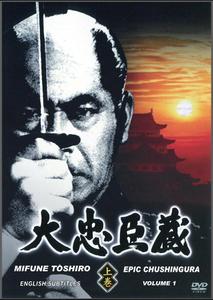
Historically, "47 Rōnin" is based on the Akō Incident of 1703. People know what samurai are supposed to look like before, during and after that time, and the filmmakers of Keanu Reeves' version ignore that.  We see the samurai with long hair and, before their ritual suicide, a funny bun on the top. Compare that to the 1991 version of "Chūshingura."
My family, descended on my father's side from daimyo and my mother's side from the merchant class, know something about hair.  While Japanese women did have wavy hair it wasn't encouraged and considered ugly. This prejudice was still strong in the Meiji period, something you might miss in movies from the Criterion collection such as "Apart from You." Modern girls wore their hair in curls.
For the women in "47 Rōnin," the some of the hairstyles in this new "47 Rōnin" are more Dr. Seuss or Marie Antoinette meets kabuki than court style. Wavy hair was considered bad hair for Japanese women, something that has been pointed out to me in Los Angeles in modern times so the prejudice lingers. Further, what aristocratic woman would be without her ladies in waiting in Japan or any other royal house--not that the women are really aristocrats.
During the Tokugawa period, Japan was ruled by the Shogunate through the aristocracy. The emperor was a puppet and he held his puppet court in Kyōto. The shogun was in Edo (now Tokyo). In the original version of the tale, an imperial envoy was sent annually to the shogun in Tokyo and the shogun's master of protocol, Lord Kira,  supposed to instruct the Lord Asano on proper manners for the occasion. Yet in this 2013 version it is the shogun visiting Lord Asano and the shogun is addressed as your "highness" instead of using a military term. Is that a mistake in translation or just ignorance on the part of the screenwriters?
During the Tokugawa period, there was a rigid four-class system: samurai, farmers, artisans and merchants. The aristocracy was above system. Also outside the class system were the Ainu, the burakumin, actors, criminals, prostitutes and courtesans.
This 2013 movie repeatedly implies that Keanu Reeves character can't be a samurai because he's a half-breed.  Yet during that time period only samurai were allowed to have swords and knives. A peasant could be killed on the spot for possessing a sword and we are repeatedly told that his character, Kai, is the son of a British sailor and a peasant. I'm not saying that there wasn't and isn't prejudice against mixed race persons in Japan, but that class was an important factor during the Tokugawa period. Kai was of the peasant class through his mother.
Although I am not a native speaker of Japanese, I have been told that originally there was no word for privacy in Japan. In a country with walls that might literally be made of little more than paper, it is hard to get real privacy so to a large extent, privacy is a mental state.
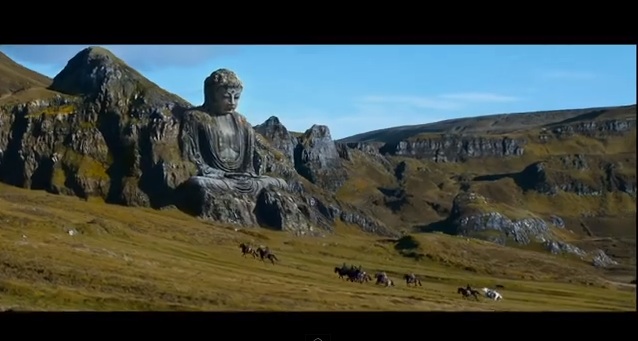
47roninYou can't feel the claustrophobia of the mountainous island nation of Japan in this movie. Some of the scenes, perhaps filmed in Budapest, make the castle look vast and Japan filled with long, flat plains. Further, geography is all mixed up. The warriors travel easily from the Tokyo area to Deshima, the Dutch colony in the bay of Nagasaki, where Keanu Reeve's character is fighting monsters. Yet in reality that's a journey that would require 205 hours on foot according to Google maps (or 8 hours by public transit).
ronincastle
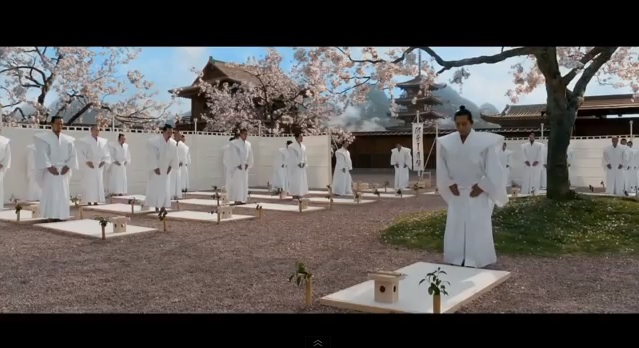
You get a sense of geographic confusion when you see the castle of the evil Lord Kira is shown as being in a dark and cold place and yet other scenes are in a bright place with cherry blossoms blooming. Cherry blossoms generally bloom in April and not for long. The winters in Tokyo are generally bright and dry. Instead of studying geography, the writers seemed to have fallen back on emotional scenic design. Dark and cold means evil. That didn't work for me in the 2013 "The Wolverine" when the action could have taken place in the distant north and it doesn't work for me here during the Tokugawa period where the fastest mode of transport is a horse.
Turning the "47 Rōnin" into a white-man-saves-the-day spectacle is cultural imperialism and in this day and age, that might have been a bad judgment call. The need to insert Keanu Reeves as a half-breed reminds me of Raymond Burr in the 1956 "Godzilla, King of the Monsters!" Is a white man--or in this case a half-white man as in the 1972-1975 "Kung Fu" TV series--really necessary after the success of Ang Lee's 2000 wuxia film "Crouching Tiger, Hidden Dragon" or his 2012 "Life of Pi"?
While the dragon in Ang Lee's movie wasn't real or even CGI, the dragon in "47 Rōnin" is not Asian. Dragons are considered lucky in China and Japan, but the evil enchantress becomes a dragon in the "47 Rōnin." Dragons are associated with wind and water in Asia, but this CGI dragon is one that breathes fire. The script does incorporate Japanese legendary characters: the tengu who are mountain warriors and the fox who can transform itself into a beautiful woman, but brings in one unnamed beast instead of incorporating the kirin or the kappa. And why bring in that nameless beast for one appearance?
The kind of imperialism of this version of "47 Rōnin" isn't as bad as the 1939 "Gunga Din" which was banned in India at the time but somewhat insensitively was used later as the inspiration for many scenes in 1984  "Indiana Jones and the Temple of Doom." The movie has a half-white character teaching the Japanese how to handle Japanese beasts and the true nature of bushidō. It fuses Japanese and Chinese culture with Western in a way that might be more digestible if this were food and not a movie.
The Variety article says that the film when it opened in Japan "needed support from the region, where the cast was well recognized. But it never gained traction there...Market research showed the key demographic of young men didn't buy enough tickets."
47_ronin_ver6Why would young Japanese men buy tickets to this movie? The advertising for the movie clearly shows that the production team doesn't understand what makes a woman sexy in a kimono. (It's not the cleavage, it's the back of a woman's bare neck and the glimpse of her white foot.) The trailers depict the samurai without the hairstyle of their class. Should a tale about Japan seem more Japanese?
While the Variety article talks about the first-time feature director Carl Rinsch didn't find a "balance between classic Eastern tale and the more Western touches" and that Rinsch wanted a more arthouse samurai film and also talks about the many writers (Chris Morgan and Hossein Amini) and many editors, what about finding the Japanese part of a story set in Japan?47Ronin2012Poster
Traditionally the story of the 47 rōnin, known as Genroku Chūshingura (the Genroku era loyal retainers), is about the conflict between human feeling (aijo) and duty (giri). Having Japanese actors as Japanese is a start and preferable to yellow face, but that isn't enough to make a good movie about Japan. Adding some Japanese items like swords and Japanese style armor, Japanese mythical creatures or a cherry tree doesn't make something Japanese. In my opinion, the "47 Rōnin" failed as a movie because it didn't respect the  culture or traditions of Japan or the samurai, or show respect for the fans of either.
47_ronin_ver6hero-2002-1

Wednesday, December 25, 2013

The Horror of Hollywood's '47 Ronin'

You won't learn anything about Japan, the samurai or the incident known historically as the Akō Incident if you see the 2013 American fantasy action film "47 Ronin." What you will see is a troubling depiction of new wave Orientalism wrapped up the latest addition to the white man saves the world film genre.

To be specific, this is a case of a half-white man saving a vendetta. The half-white person is Kai (Keanu Reeves), the illegitimate only child of a British sailor and a Japanese peasant. He is part of Lord Asano's (Min Tanaka) household, although not a samurai.
Due to a witch's spells and the evil Lord Kira's ambitions, Lord Asano is forced to commit ritual suicide (seppuku). Kai, through his connections with the supernatural world of Tengu, is able to guide the leader of the ronin, Kuranosuke Ōishi to find swords and battle against an evil witch (Rinko Kikuchi) who turns into a silver fox and finally a fire-breathing dragon so that the 47 ronin can complete their act of vengeance against Lord Kira (Tadanobu Asano).
This version of the 1701 Akō Incident features a screenplay by Chris Morgan ("Fast & Furious") and Iranian-British screenwriter Hossein Amini ( the 2012 "Snow White and the Huntsman" and 1997 "The Wings of the Dove"). Amini was nominated for an Academy Award for Best Writing for his "The Wings of a Dove" script, but he won't get much adulation for this effort.  While Amini was working with the 1902 Henry James novel of the same name for that 1997 movie, he might have consulted the popular bunraku play "Kanadehon Chūshingura"  by Takeda Izumo II. 
Apparently executive producer Walter Hamada had a hand in the writing as well, making it his first screen story credit. Hamada is better known as a producer with credits ("The Conjuring," "A Nightmare on Elm Street" and "Friday the 13th") that in no way would lead someone to believe he could help this script. The supernatural elements mix European and American horror traditions with Japanese in a manner that gives the CGI loose reins, but not in a manner that serves the story or the locale well.
The costumes designs by Penny Rose ("Pirates of the Caribbean") combine East Asian aesthetics as do the hair and makeup design. This is Japan as seen through the eyes of someone who has been watching too many Chinese period dramas and has no concept of the meaning of color or the consequences of natural resources.
Director Carl Rinsch had previously only completed video shorts as a director. How he got greenlighted for such a big budget movie is something that should be investigated; it might enlighten us into the ways of Hollywood as a business.
Certainly some of these attitudes of experimenting and blending traditions and cultures have been seen before and were acceptable to the American public in the 1930s-1950s, but hasn't the world changed since then? One wishes someone had given this budget to Takashi Miike,  a man who knows something about horror movies and has recently made a few respectable samurai movies as well.
Wait until this movie comes out on Netflix and even then, you might not be able to stifle a yawn.

Wednesday, November 13, 2013

Hayao Miyazaki's "The Wind Rises" (Kazetachinu) is unlike his previous features and is more a contemplation on war and circumstances than a perilous adventure.

No one's life is threatened. No girl struggles to make her way and resolve some problem. Here we have an actual person who did struggle with a real problem: Using the most available material in Japan to make fighter airplanes. At the time, German manufacturers made their airplanes out of metal. Japan is a metal poor country. Jiro Horikoshi was able to design the Zero WWII fighter--a zippy little airplane that at first out maneuvered the airplanes flown by the Allies.
Miyazaki imagines the near-sighted boy who dreamed of being a pilot but had to settle for designing airplanes instead. And Miyazaki adds a gentle doomed romance.
Jiro's dreams come alive, bringing him into contact with an Italian count who designed airplanes. If you dream of flying and have loved the imagery of flying that come from Studio Ghibli, you'll enjoy this gentle movie.
Sometimes war leads to innovation and sometimes we don't celebrate the technological innovations of the defeated nations. Horikoshi's innovations did results in deaths, but doesn't have those creepy ethical complications that the German (and Japanese) research (and torture) come with.
If you missed the festival screenings, "The Wind Rises" is playing for one week at the Landmark. Otherwise, it will be back in theaters for a wider release in February.

Friday, October 25, 2013

Creepy 'Catepillar' challenges imperialism

If just the thought of the larval form of the order or Lepidoptera (butterflies and moths) make you a bit queasy, then you might want to skip this 2010 Japanese film now available on Netflix. Directed by Joji Wakamatsu the movie is based on Edogawa Rampo's 1929 anti-war oddly erotic short story "The Catepillar" (芋虫 Imomushi). 

Not everyone was gungho and ready to rape and pillage in order to have Asia for the Asians as if Asian imperialism in Asia was better than European (or American) imperialism there. That's a bit of delusion equal to the white man's burden.


Edogawa Rampo is the nom de plume of Tarō Hirai (平井 太郎 1894-1965). Rampo was a great admirer of Edgar Allen Poe hence the name. This tale, like many others written by him, is characterized by eroticism, grotesquerie and the nonsensical. This particular story was censored in 1939 which was two yars after the beginning of the second Sino-Japanese War. Censors were perhaps troubled that the storyline would detract from the war effort.

"Caterpillar" is not a bug, but a human who is reduced to nothing more than a human larva. Without arms or legs, deaf and mute with a face that is horribly scarred, he cannot communicate, he cannot eat, bathe or dress himself. He, Lt. Kurokawa (Keigo Kasuya) was not a good man during the war, having committed rape and murder and these memories come back to haunt him. Yet he still wants sex and his wife (Shinobu Terajima), though repelled by his form and greedy lust, feels duty bound to service him.

Yet eventually Kurokawa finds sex with his wife reminds him of his war crimes and he begins to find his current situation unbearable. Love of country and patriotism become empty words for both Kurokawa and his wife.

The late Wakamatsu is perhaps best known for producing Nagisa Oshima's "In the Realm of the Senses" and this movie is in keeping with his pink film legacy. Wakamatsu died in October of 2012 and "Caterpillar" is his penultimate film.

"Caterpillar" is an uncomfortable mix of erotic scenes of the attractive naked Terajima and the frightful flashbacks of the war and Kurokawa's  currently pitiful state. "Caterpillar" is not a pro-war movie but it also isn't quite erotica. "Caterpillar" can be streamed on Netflix.

Sunday, September 29, 2013

'Wolf Children' is a lyrical look at werewolves

The director of the 2006 "The Girl Who Leapt Through Time" and the 2009 "Summer Wars," Mamoru Hosoda, has teamed up again with writer Satoko Okudera ("Summer Wars") for a gentle, lyrical look at a different kind of werewolf in "Wolf Children."


The original Japanese title is "Okami kodomo no Ame to Yuki" (おおかみこどもの雨と雪』) meaning "The Wolf Children Rain and Snow."  Here the wolves aren't so much a threat to humans as the humans are a threat to humans and the movie is a celebration of nature. This is a more lyrical movie than "The Girl" but like that movie as well as "Summer Wars," "Wolf Children" looks at the problems faced by young teens.

Okudera wrote the screenplay for "The Girl" based on Yasutaka Tsutsui's original novel.  Hosoda wrote the story for "Summer Wars" with Okudera writing the screenplay.  Together, Hosoda and Okudera adapted Hosoda's story for the screenplay of "Wolf Children."

The movie is told from the perspective of the daughter, Yuki. Their father was a mysterious figure that their mother, Hana (meaning flower) met while she was a college student. They fall in love, but he reveals to Hana that he is a wolfman, a descendant of the now extinct Japanese wolf. Hana and her Wolfman become a family having two children: Yuki who was born on a snowy day and Ame who was born on a rainy day. Because Hana is afraid that the babies may be born as wolf cubs or transform in front of the eyes of the hospital staff, the babies are born at home.

On one rainy day, the father disappears, only to be found dead in the form of a wolf. Hana must care for her children alone. With two kids who during times of great excitement transform into wolf cubs, Hana decides to move to a remote country area where her nearest neighbors can't be seen. Although Yuki begins as the wild one, she yearns to belong to the human world and insists on starting school. At school, Yuki only has one mishap, turning into a wolf when she is pursued by a boy who wonders why she is trying to avoid her. The boy, Souhei, is a new transfer student and someone senses something different about Yuki.

Yuki and Sohei eventually become friends.

Ame finds his own education in the forests. His teacher is an old fox and despite his sister's urging, Ame finds no interest in the human school learning. Being both children of the natural and human world, the children must make choices as they are on the edge of adulthood.

Besides the obvious references to nature (Rain, Winter and Flower), to the Japanese, the kanji used for Souhei hints at nature, referencing both a flower (wisteria is fuji) and meadows (sou is grass and hei means peaceful or flat).  There's also a play on the Japanese phrase ameotoko (which literally means rain man), a phrase used to label someone who brings rain.

Historically, the last known Honshu wolf died in 1905 in Nara prefecture.  Japanese wolves were relatively small--only 12 inches at the shoulder.  According to Japanese folklore, the Honshu wolf was supposed to be the guardian of the mountains.  The Japanese fox still exists in the wild and in Japanese folklore are shapeshifters.  While  foxes in Japanese folklore are often portrayed as tricksters, they are seen as something more noble here "Wolf Children."

The werewolves in "Wolf Children" aren't frightening, but merely misunderstood and like all children need to learn how to control their wild impulses.  The full moon doesn't force their transformation, because they have control of their emotions.  In that respect, this movie seems to be a subtle portrayal of humans learning to live within a loving more positive culture found in the countryside and an allegory of humans learning to live with nature.

"Wolf Children" was nominated for a 2012 Asia Pacific Screen Award and won a 2013 Japanese Academy Award for Best Animation Film. It also won a Mainichi Film Concours Award, the Audience Award and the Films from the South Award at the Oslo Films from the South Festival as well as a Orient Express Award for Best Animated Feature Film from the Sitges-Catalonian International Film Festival.

"Wolf Children" is dubbed in English.  Currently, "Wolf Children" is scheduled for a limited run and is screening only at the Laemmle Town Center (in Encino) until 3 October 2013.